value, meaning a $566,500 home pays roughly $10,000 annually in property tax.
• New Jersey overall has some of the highest property tax rates in the U.S., with effective rates around 1.8 % to 1.9 % of home value.
For federal tax when selling your home, the IRS allows up to $250,000 of profit tax-free for individuals or $500,000 for married couples if you lived in and owned the home at least 2 of the last 5 years.
If you don’t meet those IRS rules, any profit above the exclusion may be taxed as a long-term capital gain (0%, 15%, or 20% depending on income) when you file your federal tax return.
Property taxes are one of the few expenses homeowners never escape — yet most people understand them the least.
In Spring Lake, many homeowners pay their property tax bill every quarter without ever asking a simple question:
“Is this number actually correct — and is there anything I should be doing about it?”
That question matters more than most people realize.
Because once a property tax assessment is accepted year after year, it becomes permanent by default. And permanent overpayments quietly drain cash, affect retirement plans, and limit long-term options.
This guide is written to change that.
Not to alarm you.
Not to confuse you with legal language.
But to help you clearly understand how Spring Lake property taxes work, why they rise, and how smart homeowners stay in control.
How Property Taxes Really Work in Spring Lake
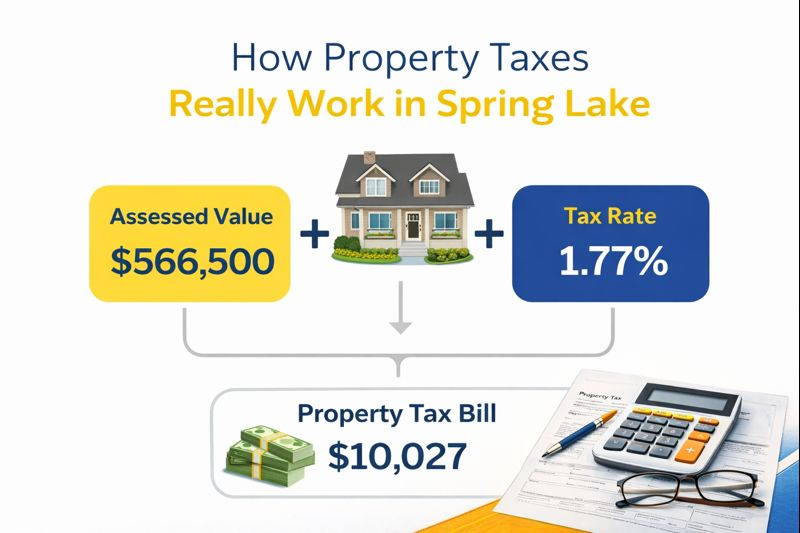
Every Spring Lake property tax bill is built on two foundations:
1. The assessed value of your home
This is the value assigned by the local tax assessor. It is based on market data, property characteristics, and municipal records — not necessarily what your home would sell for today.
2. The local tax rate
The tax rate is set by combining municipal, county, and school district budgets. When budgets increase, tax rates often follow.
Your total property tax is simply the combination of those two numbers.
What most homeowners don’t realize is this:
You have far more control over the assessed value than the tax rate — and that’s where most overpayment happens.
Why Property Taxes Increase (Even When Nothing Changes)
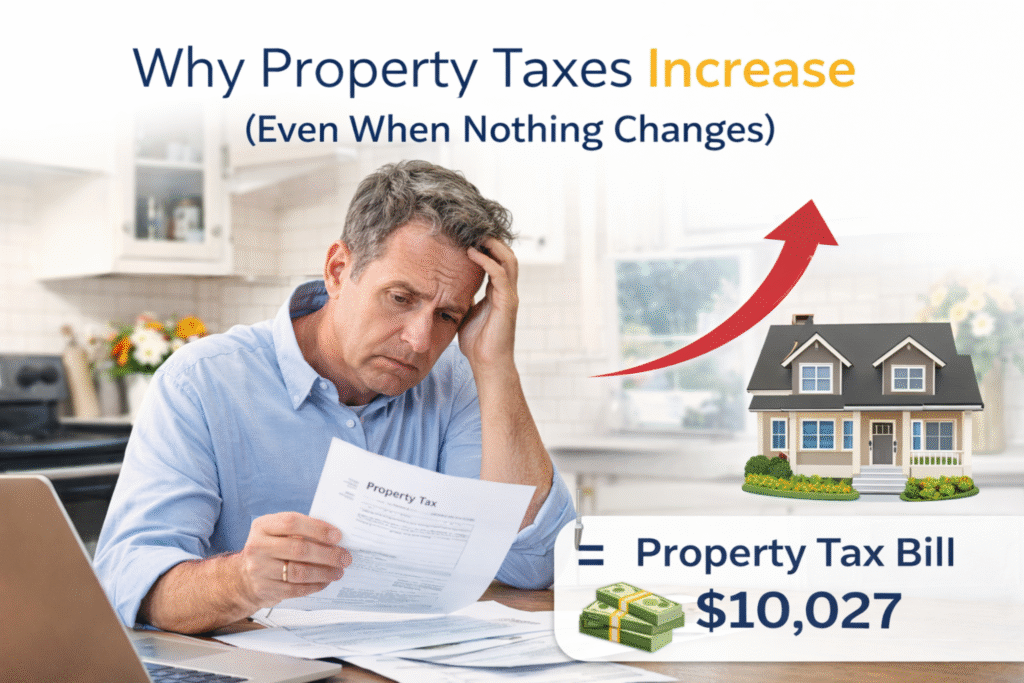
One of the biggest frustrations homeowners express is this:
“I didn’t renovate. I didn’t buy. I didn’t sell. So why did my taxes go up?”
In Spring Lake, property taxes often rise for reasons completely outside your control — but still within your responsibility to monitor.
Reassessments and Market Adjustments
When the municipality conducts a reassessment or partial reassessment, property values are updated to reflect current market conditions.
If your home appreciated faster than others — even on paper — your tax burden may increase even if your neighbors’ bills stay flat.
Local Budget Growth
Property taxes fund schools, infrastructure, emergency services, and municipal operations. When those budgets grow, tax rates can rise regardless of your home’s condition or value.
Property Improvements (Even Old Ones)
Finished basements, additions, upgraded kitchens, garages, or structural changes can all affect assessed value. In many cases, homeowners see increases years after the work was completed.
Lost or Expired Exemptions
Some deductions and relief programs require renewal. If paperwork lapses, taxes can increase quietly — without warning.
None of these are mistakes.
But all of them deserve review.
Understanding Your Spring Lake Property Tax Bill
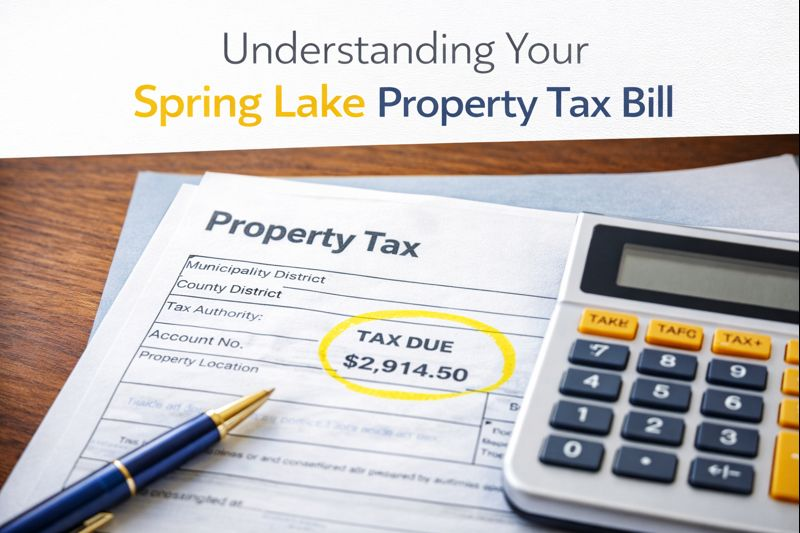
Your property tax bill is usually issued quarterly and includes multiple components:
- Municipal taxes
- School district taxes
- County taxes
- Any applicable assessments
The total number matters — but what matters more is how that number was calculated.
Most homeowners never review:
- The assessed square footage
- Property classification
- Comparable sales used
- Accuracy of property records
That’s where errors hide.
And once those errors sit unchallenged for years, they become expensive habits.
When a Property Tax Assessment Deserves a Second Look
You don’t need to be a tax professional to know when something feels off.
A Spring Lake homeowner should review their assessment if:
- The assessed value is close to or higher than recent nearby sales
- The tax bill jumped noticeably without major improvements
- Comparable homes are taxed less
- The assessment hasn’t been reviewed since purchase
Small discrepancies compound over time.
An extra few thousand dollars in assessed value doesn’t feel dramatic — until it quietly costs you tens of thousands over a decade.
Appealing a Property Tax Assessment: What It Really Is (and Isn’t)
A property tax appeal is not a complaint.
It’s not an accusation.
And it’s not an audit trigger.
It’s simply a formal request asking the municipality to justify the valuation using current, accurate data.
Strong appeals are based on:
- Comparable property sales
- Correct square footage and condition
- Accurate property classification
- Clear documentation
Deadlines are strict. Miss them, and the assessment usually stands for another year — even if it’s inflated.
This is why proactive homeowners review early, not react late.
Property Tax Relief, Exemptions, and Deductions
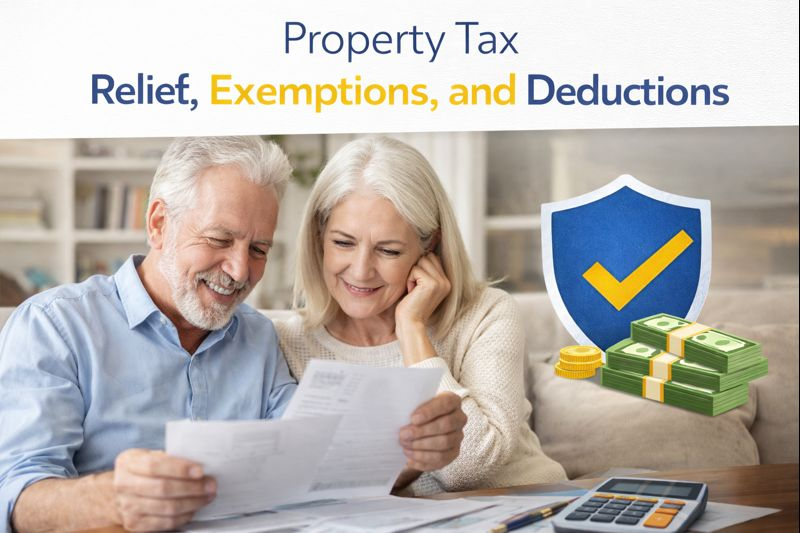
Spring Lake homeowners may qualify for certain tax relief programs depending on age, disability status, or veteran eligibility.
These programs can reduce property taxes — but they are never automatic.
Applications must be filed, eligibility confirmed, and in some cases re-certified. If paperwork expires or circumstances change, the savings disappear quietly.
Many homeowners overpay simply because no one reminded them to reapply.
Property Tax Questions
What is the new tax rule for property sale?
When selling a primary residence, homeowners may exclude up to $250,000 (single) or $500,000 (married filing jointly) of capital gains if ownership and use tests are met. Gains above that may be taxable.
At what age do you stop paying property taxes?
There is no age where property taxes automatically stop. Some seniors may qualify for relief programs or credits, but property taxes are not eliminated.
How do you calculate tax on property?
Property tax is calculated by multiplying the assessed value of the property by the local tax rate.
How does property tax get charged?
Property taxes are charged by local governments and paid quarterly or annually, either directly or through mortgage escrow.
Which house property is not charged to tax?
No residential property is fully exempt by default. Certain homes may qualify for exemptions or reductions based on eligibility.
What is the best reason to protect against rising property taxes?
Because unchecked property taxes quietly erode cash flow and long-term financial stability — especially for retirees and fixed-income homeowners.
Property Taxes and Long-Term Financial Impact
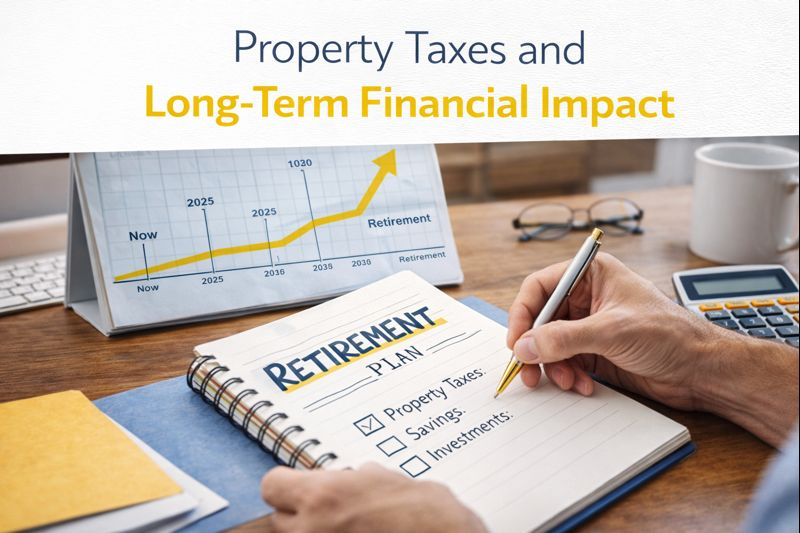
Property taxes don’t just affect your monthly budget.
They influence:
- Retirement planning
- Fixed-income stability
- Home affordability
- Decisions about selling or downsizing
- How long you can comfortably stay in your home
Most people only think about property taxes when the bill arrives.
Smart homeowners think about them before the number becomes permanent.
Final Thought
Most homeowners believe their property tax bill is non-negotiable.
That belief is expensive.
John works with homeowners who want clarity — not surprises. His focus isn’t on reacting after the bill arrives. It’s on understanding the numbers early, reviewing assessments intelligently, and helping homeowners avoid silent overpayment year after year.
Property taxes aren’t just a line item.
They’re a long-term financial commitment.
And like any commitment, they deserve review — not blind acceptance.
If your Spring Lake property taxes feel confusing, higher than expected, or simply unchecked, that’s not something to ignore.
Because once another year passes, the number isn’t just higher — it’s locked in.